What Really Happens to Your Clothes When They Arrive With Us
People think dry cleaning works like this:
You drop your clothes in.
We press a button.
They come out perfect.
If only.
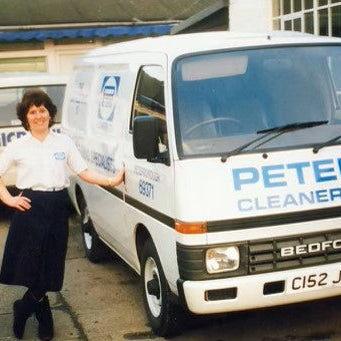
The truth is, every single item that arrives with us goes on a full little journey - a spa day meets a detective investigation meets a chemistry class - with a team who’ve been doing this for decades. Some of our cleaners have been here longer than Clare's been alive. That’s not a joke.
So here’s what actually happens to your clothes, Peters-style.
1. The Pre-Check: The Bit Most People Don’t Know Exists
The moment your parcel arrives from InPost, it doesn’t just get tossed into a machine.
It gets opened, photographed and inspected - properly inspected.
We check:
-
seams
-
hems
-
buttons
-
beads
-
sequins
-
linings
-
stains
-
loose threads
-
any damage
-
anything at all that could cause trouble later
If something looks risky... say beads glued on rather than sewn, or a stain that’s already “set in”, we note it, and if needed, contact you before we go any further.
This step alone takes time, but it’s the only reason we consistently avoid disasters like melted embellishments, shrunk wool, or the dreaded “How did this happen?” phone call.
It’s also why we photograph everything before cleaning, and after so we always know exactly how an item arrived, and we can track every step of its care.
This is also the moment the team often starts guessing the backstory of each stain.
We’re not judging. We’re just nosy in a professional way.
2. The Fabric Detective Work: The Science Bit (But Fun)
Once the garment’s through its initial check, the real thinking begins.
Our team looks at:
-
the fibre (wool, silk, viscose, cotton, blends…)
-
the weave
-
the construction
-
the lining
-
the trims
-
the age of the item
-
and the type of stain
Care labels are useful, but they’re not gospel. They tell you how the fabric behaved during manufacturing but not necessarily the safest option for its life now.
So the team decides how it should actually be cleaned.
That might match the label, or it might not.
For example:
If a dress says Dry Clean Only but has glued-on beads, dry cleaning could melt them.
If a “dry clean only” coat is covered in mud, solvent won’t touch it - it needs wet cleaning.
If viscose looks fragile (which it often is when wet), we adjust everything to stop it tearing.
This is the kind of judgement you only get from cleaners like Terena and June - women who have been doing this since flared trousers were in fashion the first time.
3. The Stain Battle: The Bit That Looks Like Wizardry
Once we know how the fabric will behave, we tackle the stains.
And yes - this is the part people assume is magic.
Every stain has a personality and a chemical makeup.
Oil, protein, tannin, dye transfer, ink, mud: they all react differently.
Our team uses:
-
tiny tools
-
special brushes
-
enzyme treatments
-
steam
-
spot-cleaning solutions
-
and a frankly terrifying amount of expertise
Removing stains isn’t about rubbing harder that’s how things get ruined.
It’s about persuading the stain to leave without upsetting the fabric.
Some items get more spa treatment than I do.
4. Cleaning: Dry, Wet, Laundered or Spot Cleaned
After the stain work, your garment goes into the cleaning method chosen during the fabric assessment.
Dry Cleaning
Great for oils, delicate fibres, tailored garments and anything structured or lined.
Wet Cleaning
A water-based system, but gentler and more controlled than traditional laundry. This is brilliant for mud, odours, and delicate fibres that need freshening.
Laundering
Used for robust everyday items that respond well to water and detergent.
Spot Cleaning Only
For fabrics too fragile or too risky for full immersion.
Every single cycle is adjusted: agitation, heat, time, solvent balance - nothing is “just put on a normal wash.”
Our team do not do “normal.”
5. Pressing: The Art Form No One Talks About
Pressing is where a garment truly comes back to life.
A good press reshapes, lifts, sharpens, and restores the structure of clothing.
A bad press… well… that’s how you get shiny suits and sad-looking lapels.
June: who has been with us since 1975 can press a lapel so crisp you could slice a Victoria sponge with it.
This stage is slow, intentional, extremely hot and extremely skilled.
It’s one part choreography, one part experience and one part sheer pride.
6. Wrapping: Just Like We’ve Always Done It
Once everything is cleaned and pressed, we wrap each item in acid-free tissue, fold it carefully, and place it into a box sized to protect the garment.
We’ve been doing this exact process since the 1960s.
Because it works.
And because opening a box to find your clothes looking fresh, smooth and cared-for is half the joy.
Then it goes straight back into an InPost locker for you to collect whenever suits you.
The Moment We Live For
When you open that locker door, and open the box, we want you to think:
“Oh wow — that’s been done properly.”
Because behind the scenes, it has.
Every item is checked, cleaned, pressed and wrapped by a team who’ve spent 40+ years perfecting their craft and still care about every single garment as if it were their own.
And that’s the real difference.
Dry cleaning isn’t a button.
It’s a process, a skill and a whole team of people who really, genuinely give a damn.